
By Matt Rooney
As the war over ICE continues to rage across America, Save Jerseyans, not all “sanctuary” approaches are created equal.
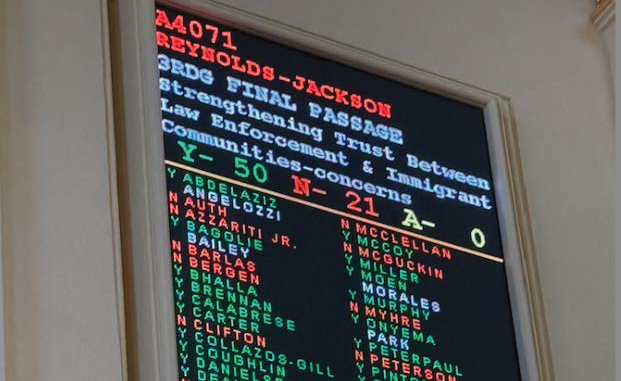
For New Jersey policymakers tempted by bold statutory sanctuary language, here’s a reality check: codifying resistance to federal immigration enforcement may be far more vulnerable to legal attack than crafting sanctuary policy through executive action. Don’t take my word for it; here’s what former Governor Phil Murphy said when he vetoed attempt #1 at codifying sanctuary statehood back in January:
“The Immigrant Trust Directive, which has been in place since 2018, is one of the greatest successes of our Administration. Most importantly, the Directive has withstood judicial scrutiny by multiple federal judges, including one appointed by President Trump and another appointed by former President George W. Bush. Today, the Directive is settled case law in the Third Circuit at a time when our federal judiciary has increasingly taken a more activist posture and struck down critical rights and protections. Both Governor-elect Sherrill and Attorney General-designate Davenport have stated that the Directive is working.”
“I am extremely concerned that signing this bill, which differs from the Immigrant Trust Directive, would open New Jersey up to a new court challenge and renewed judicial scrutiny from judges who may not render the same decision upholding these critical protections. Renewed litigation would also put our time-tested Immigrant Trust Directive at risk, endangering hundreds of thousands of immigrants in New Jersey in one fell swoop. I cannot in good conscience allow that to happen. Re-opening the door to judicial scrutiny of our State’s immigration policies, combined with the Trump Administration’s increasingly targeted actions against states and cities, is a recipe for disaster for our immigrant brothers and sisters and puts them in greater danger. And that is not something I am willing to risk when the Directive is secure for the foreseeable future.”
Of course I hate his logic, but there’s a legal truism embedded in there…
At the heart of the legal debate is the Supremacy Clause of the U.S. Constitution: federal immigration law is supreme, and when state law conflicts with federal immigration statutes — especially as interpreted by the federal executive — courts are predisposed to strike the state law down. That’s why states that try to embed sanctuary protections into statute invite litigation that can tie up policy in costly courts for years.
In 2025 and 2026, the fight has only intensified. The federal government has aggressively targeted sanctuary jurisdictions with lawsuits. In United States v. Illinois, the Department of Justice challenged Illinois statutes that sharply limit cooperation with Immigration and Customs Enforcement (ICE), alleging they frustrate federal enforcement and conflict with immigration statutes, though a federal court initially dismissed those claims — at least for now. Similarly, federal litigation against New York over its DMV “Green Light Law” sought to block state prohibitions on sharing driver data with federal immigration authorities.
Closer to home, the U.S. Department of Justice recently sued the Sherrill Administration over an executive order limiting ICE access to state property, alleging it clashes with the Supremacy Clause. This case vividly illustrates the legal tightrope states walk when even executive directives brush up against federal powers.
Guidance from a governor or attorney general that prioritizes state resources or sets cooperation priorities — without explicit statutory conflict — is still horrible policy and constitutionally dubious but, as of now, has proven generally more defensible in court. It’s deceptively framed as resource allocation and discretionary enforcement, not an outright legal obstruction. Federal courts historically give wider berth to executive discretion than to statutes that purport to limit or negate federal authority. Do I agree with those judges? Nope. But that’s hardly novel!
The national litigation landscape underscores the point: states that embed sanctuary restrictions in statute create a clear legal target. Executive actions, while certainly not immune from challenge, arguably occupy a grayer space that statutory language cannot.
For lawmakers in Trenton, the choice was stark: flashy statutes that end up tied in federal court, or strategic executive policies that deliver sanctuary protections without unambiguously jeopardizing federal aid and legal standing. The former may satisfy political bases, but the latter stands a better chance of surviving the next legal challenge.
Let’s see whether Governor Sherrill chooses flash or strategy.
_
MATT ROONEY is SaveJersey.com’s founder and editor-in-chief, a practicing New Jersey attorney, and the host of ‘The Matt Rooney Show’ on 1210 WPHT every Saturday evening from 7-9 PM EST.