By Matt Rooney
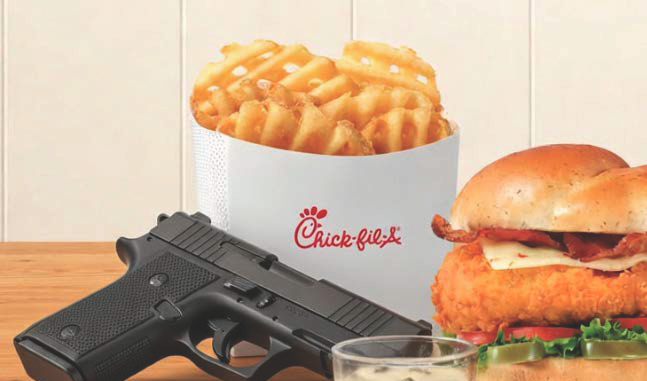
Within hours of the shooting at a Chick-fil-A in Union, New Jersey, the script wrote itself, Save Jerseyans. Cable hits, social posts, preloaded statements—all pointing to the same tidy conclusion: “gun violence.”
It’s the kind of phrase that sounds like an explanation but functions as an escape hatch.
Because if this is just about the tool, then nobody in charge has to answer for the conditions that produced the people using it.
Look at what actually happened. This wasn’t some spontaneous eruption or a lone actor spiraling in public. This was a group—masked, coordinated, deliberate—moving into a restaurant and opening fire in a confined space. That’s not a policy gap you patch with another regulation. That’s a breakdown.
And it didn’t happen overnight.
New Jersey didn’t stumble into this because it lacks gun laws. It’s drowning in them. If the theory is that more restrictions equal less violence, places like Union should be among the safest in the country. Instead, we’re watching a different pattern emerge: fewer restraints on behavior, more brazen displays of it.
That’s not coincidence. That’s cause and effect.
For years, the people running this state—and many of the institutions that shape its culture—have been sanding down the very idea of consequences. Prosecutors downgrade. Legislators “reform.” Activists redefine accountability as oppression. Police are told to do less, hesitate more, and expect less backing when it counts.
You don’t need to romanticize the past to see what that produces. You just need to pay attention.
It produces individuals who don’t think twice about escalating a dispute into a public spectacle. It produces crews who operate like they’ve already calculated the risk—and decided it’s manageable. It produces bystanders who pay the price for someone else’s grievance.
Call that whatever you want. Just don’t call it mysterious.
Here’s the part that’s least convenient for the people eager to default back to “gun violence”: even perfect compliance with every existing firearm law wouldn’t fix this mindset. It wouldn’t reintroduce restraint. It wouldn’t rebuild the internal brakes that used to stop people from turning a grievance into a headline.
That work is slower. It’s harder. And it’s almost entirely absent from the current policy conversation.
Real deterrence isn’t complicated, but it is politically unfashionable. It means making examples of violent offenders instead of explaining them away. It means backing law enforcement instead of second-guessing it in real time. It means drawing bright lines—and enforcing them—so consistently that even the people tempted to cross them think twice.
Right now, we’re doing the opposite. And then acting surprised at the results.
So yes, a gun was used in Union. No one disputes that. But reducing what happened to “gun violence” is like describing a bank robbery as “note-passing.” Technically true. Completely beside the point.
The truth is simpler, and a lot less comfortable: this is what it looks like when a society loses its grip on basic order and then tries to legislate around the symptoms.
Union isn’t an anomaly. It’s a warning.
The question isn’t whether we’ll hear it.
It’s whether anyone in charge is willing to admit what it’s actually saying.