

By Matt Rooney
Republicans looking for an explanation for last Tuesday’s New Jersey bloodbath should spend less time imagining complexities which don’t exist and more time answering a basic question:
How did they expect to protect the bottom of the ballot while leaving the top almost completely unfunded?
Don’t take my word for it! The numbers tell the story: Trump carried 12 of New Jersey’s 21 counties in 2024; Justin Murphy carried just five in the preliminary 2026 Senate returns. The statewide Democratic margin ballooned from 5.9 points to approximately 27.3 points. Morris went from Trump +2.7 to Booker +12.2; Monmouth went from Trump +11.4 to Booker +6.3; and Gloucester went from Trump +2.8 to Booker +18.5. Even Ocean, the GOP’s indispensable vote bank, saw its Republican margin shrink from 36 points to roughly 8.6. Different candidates and different electorates, certainly—but those were the headwinds Republican candidates farther down the ballot had to overcome.
Let me be clear: I’m not placing all of the blame on Justin Murphy. I endorsed him and emceed his first town hall. This is a broader criticism of a Republican establishment that failed to build a serious, adequately funded statewide effort around its nominee. Justin stepped forward to take on an entrenched incumbent. Expecting him to overcome an enormous financial disadvantage through personal determination alone was never a viable strategy. A nominee needs a party behind him: donors, organization, voter outreach and leadership willing to make the case that his campaign matters.
Look at the resources available: Murphy ended September with $9,578 in the bank. He raised $35,860 during the third quarter. Booker raised roughly $1.8 million during that same period and finished it with nearly $22.6 million available. Booker also transferred $1 million to the Democratic State Committee during the quarter. Was that supposed to end well for anyone?
One party’s Senate campaign was helping finance the broader operation. The other party’s nominee barely had enough cash to run a competitive municipal campaign in a small town.
That is an organizational failure. The Republican Party needs to own it.
Of course the predictable defense is that Booker was going to win anyway. New Jersey is expensive. National Republicans had other priorities. Resources are finite.
Fine. But a statewide campaign has value beyond the possibility of winning its own race.
It can reach voters who will never hear from a county commissioner candidate. It can establish a common message, recruit volunteers, encourage early voting and give less-engaged Republicans a reason to participate. It can also force the opposition to spend time and money defending its own nominee. Murphy even demonstrated that he had brand potential with his viral debate performance against Booker.
Those benefits matter most when the political environment turns hostile.
Instead, Republican candidates farther down the ballot were left trying to survive beneath a statewide landslide. Democrats flipped county-government control in Cumberland, won commissioner seats in Morris and Monmouth, and defeated multiple Republican county officials in Atlantic. Even Salem, which Murphy carried, elected two Democratic county commissioners.
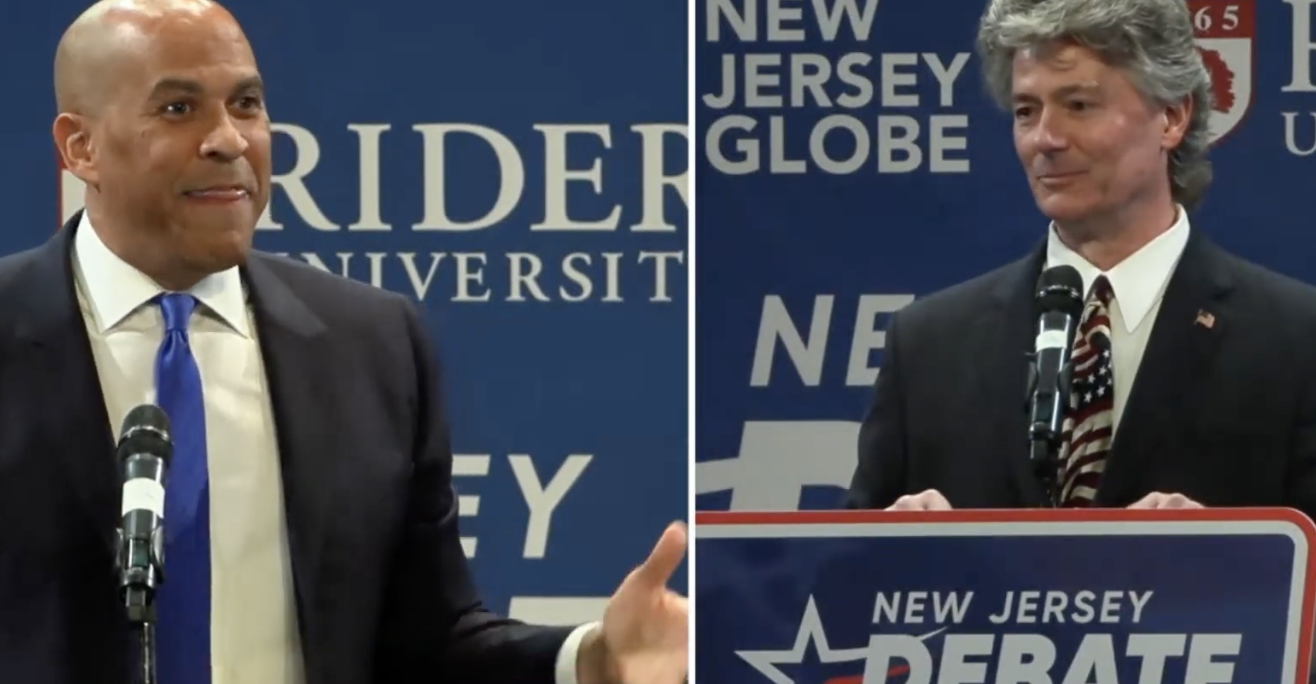
Would a properly funded Murphy campaign have prevented every one of those losses? Of course not! The results cannot tell us exactly how many seats additional spending would have saved.
But that uncertainty doesn’t excuse the failure to compete.
My contention is that leaving the statewide campaign financially crippled helped turn a difficult election into a down-ballot disaster. A party facing strong headwinds needs more voter contact, more organization and a clearer statewide argument. Republicans entered the final stretch with their Senate nominee possessing less than $10,000.
You don’t need to believe Justin could have beaten Booker to recognize the value of giving him the resources to narrow the gap. In a close local contest, reaching and turning out a few hundred additional voters can matter enormously.
And blaming the underfunded nominee afterward would only compound the failure. The people with access to donor networks and institutional resources should be answering for what they did to help him compete.
Republican leaders cannot keep treating statewide races as disposable and then act surprised when county and municipal candidates struggle underneath them.
The establishment failed to finance a serious statewide fight.
Down ballot Republicans paid the price.