By Matt Rooney

If you’ve opened your electric bill lately, congratulations: you’ve already discovered Trenton’s energy policy.
It costs more. It delivers less.
For years, New Jersey politicians have promised residents they could retire reliable power plants, slow-walk new infrastructure, discourage natural gas, and somehow still enjoy abundant, affordable electricity. Reality has finally caught up.
Demand is climbing. Supply isn’t.
Data centers are coming. More cars are plugging into the grid. More buildings are being electrified. Yet New Jersey has spent years making it harder—not easier—to build the reliable generation needed to keep the lights on.
Everyone from conservatives to environmentalists now seems to agree on one thing: America needs more nuclear power.
They’re right.
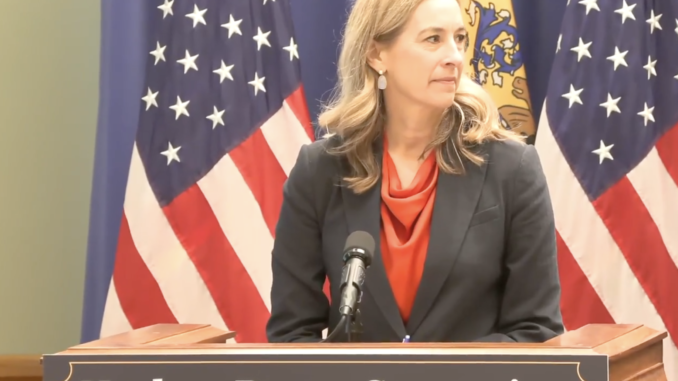
This week, Governor Mikie Sherrill signed the “Power NJ Act” which sets up a years-long process to develop 1,100 MW of nuclear power (or more).
“The decisions we make today will determine the future we leave our kids, so we are putting New Jersey on a path to an affordable and secure energy future,” said Sherrill. “I am excited to launch our state’s process to procure new, advanced nuclear power that will provide clean, reliable energy at scale for generations to come and meet our growing energy demands – from powering our small businesses, schools, and hospitals, to strengthening grid capacity and reliability for extreme weather that is becoming unfortunately all too frequent.”
But here’s the inconvenient truth: nuclear isn’t going to rescue New Jersey this decade.
Even under optimistic assumptions, a new nuclear reactor would likely take at least a decade—and probably longer—to license, finance, and build. Small modular nuclear reactors show tremendous promise, but they’re still in the early stages of commercial deployment. Betting New Jersey’s immediate energy future on technology that likely won’t arrive until the 2030s is like calling the fire department after the house has already burned down.
The crisis is happening now.
If Trenton is serious about lowering electricity prices and improving reliability, it needs to utilize the one technology able of delivering large amounts of dependable power within this decade: natural gas.
Modern combined-cycle natural gas plants can generally be planned, permitted, and constructed in a fraction of the time required for new nuclear generation. Instead of waiting fifteen years, New Jersey could begin bringing meaningful new generation online within several years—assuming, of course, politicians stop standing in the way.
That doesn’t entail abandoning nuclear.
Quite the opposite.
The smart strategy isn’t choosing between natural gas and nuclear. It’s recognizing that they solve different problems on different timelines.
Natural gas serves as the bridge that keeps electricity affordable while developing nuclear technologies mature. Nuclear should become the long-term backbone of America’s energy future because it provides around-the-clock, emissions-free electricity with decades of reliable operation. But until those reactors exist, someone has to keep the lights on.
 Unfortunately, ideology has replaced common sense in Trenton.
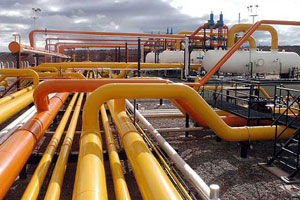
The same political class that spent years attacking pipelines and reliable generation now acts surprised when wholesale electricity prices spike and residents receive sticker shock from their utility companies. Energy isn’t magic. If demand rises while reliable supply stagnates, prices go up. Every first-year economics student understands this. Apparently, many New Jersey policymakers do not.
Families don’t care whether the electricity keeping their refrigerator running comes from a gas turbine or a nuclear reactor. They care whether they can afford the bill.
Businesses deciding where to invest don’t grade states on climate press releases. They ask whether the power will be reliable and competitively priced.
New Jersey should absolutely pursue next-generation nuclear power. It has to streamline permitting, welcome innovation, and position itself to benefit from the next wave of American nuclear technology.
But pretending nuclear can solve today’s electricity shortage is wishful thinking.
The state needs a two-track strategy: build reliable natural gas generation now, build nuclear for tomorrow, and stop allowing ideological opposition to dependable energy to make New Jersey families pay the price.