By Matt Rooney

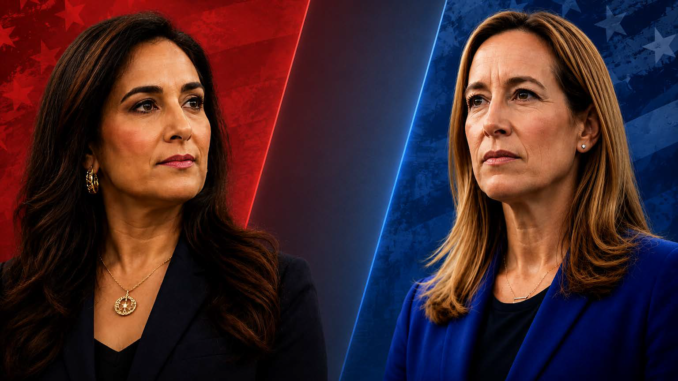
Governor Mikie Sherrill wants New Jerseyans to believe her dispute with the U.S. Department of Justice is about protecting residents’ privacy, Save Jerseyans.
It isn’t.
It’s about accountability.
After admitting that approximately 6,600 people who identified themselves as noncitizens nevertheless wound up registered to vote—and that roughly 400 actually cast ballots—Sherrill’s first instinct wasn’t maximum transparency. It was to tell the Department of Justice, in effect, “You can’t have the records.”
That’s a remarkable response after acknowledging what may be the largest election administration failure in modern New Jersey history.
The DOJ isn’t demanding “private” information out of idle curiosity. It’s investigating whether New Jersey complied with federal election law. Congress specifically empowered the federal government to enforce laws like the National Voter Registration Act (NVRA), the Help America Vote Act (HAVA), and the Civil Rights Act when questions arise about the integrity of a state’s election system.
Those laws exist precisely for moments like this.
Sherrill insists there is “no legal basis” for the DOJ’s request while pointing to a collection of New Jersey privacy statutes. That argument overlooks a fundamental constitutional principle: if Congress has authorized a federal investigation, a state cannot simply invoke its own laws to block it.
The Supremacy Clause is not optional.
Imagine the alternative. Every state under federal investigation could refuse to cooperate simply by passing a confidentiality statute. Federal enforcement of voting-rights laws would become meaningless, and Congress’s authority would depend entirely on the goodwill of the very officials under investigation.
Even the federal privacy law Sherrill cites—the Driver’s Privacy Protection Act—isn’t the shield she suggests. It contains exceptions allowing government agencies to obtain records while carrying out official duties authorized by law. The DOJ plainly believes that’s exactly what’s happening here.
Could a court determine that some categories of records are too broad? Theoretically, though I don’t see it in this instance.
Could sensitive information ultimately be produced under a protective order? Of course.
But those are questions for a federal judge—not for the same state government whose broken voter registration system created this controversy.
And that’s the central problem with the governor’s response.
She’s asking the public to accept the assurances of the very bureaucracy that admitted it improperly registered thousands of self-identified noncitizens to vote.
If this truly was nothing more than a software error, as the governor insists, then transparency should be her strongest ally. Producing the requested records would help confirm that explanation and restore confidence.
Instead, Trenton’s first instinct has been to close ranks.
Assistant Attorney General Harmeet Dhillon wasn’t buying it. Responding Tuesday night on X, she wrote: “Gov. Sherrill’s refusal to cooperate with federal law enforcement does nothing to protect law-abiding NJ voters. NJ has a legal duty to keep ineligible voters off its rolls, and our request is grounded in that legal authority. DOJ will get this information through all legal means!”
Whether the governor likes it or not, that’s now the posture of the federal government. This isn’t a political spat between Republicans and Democrats. It’s a legal showdown over whether a state can refuse to provide records sought in a federal election-law investigation after admitting thousands of ineligible registrations slipped through its own system.
If Governor Sherrill is confident in her administration’s explanation, she should stop resisting federal scrutiny and let the facts speak for themselves.
Because public confidence in elections isn’t restored by carefully worded press releases or baseless procedural objections.
It’s restored by transparency—and by following the law, even when it’s inconvenient.