
By Matt Rooney

There are two separate questions surrounding Lindsay Clancy, Save Jerseyans.
The first is legal and psychiatric: Was she insane when she killed her three young children?
That question belongs to doctors, lawyers, judges and ultimately a jury applying Massachusetts law. Mental illness is real. Postpartum psychiatric disorders are real. Criminal responsibility is a legal question with specific standards, and none of those subjects can be easily reduced to political talking points.
But there is another question that the rest of us are perfectly capable of asking: Why are so many people seemingly desperate to find a way to sympathize with Clancy?
And why should anyone be surprised?
We have spent decades teaching Americans — particularly young, college-educated women — that motherhood does not create an absolute moral obligation to protect the life of your child. Your baby is no different than your fingernail – a “part” of your body, not an individual endowed with individual rights from the Creator. In fact, progressive politics increasingly treats the opposite proposition as not simply a “right,” but a sacrament.
A healthy unborn child at 20 weeks? Her mother’s choice.
At 30 weeks? Still her mother’s choice under the most permissive abortion regimes.
At 39 or 40 weeks? The rhetoric remains fundamentally the same: bodily autonomy, reproductive freedom, don’t judge the mother, trust women.
Then the baby passes through the birth canal and suddenly we’re supposed to pretend that the moral universe has undergone an instantaneous transformation? That’s an awfully difficult cultural circle to square.
Call it “Maura Healey Syndrome.”
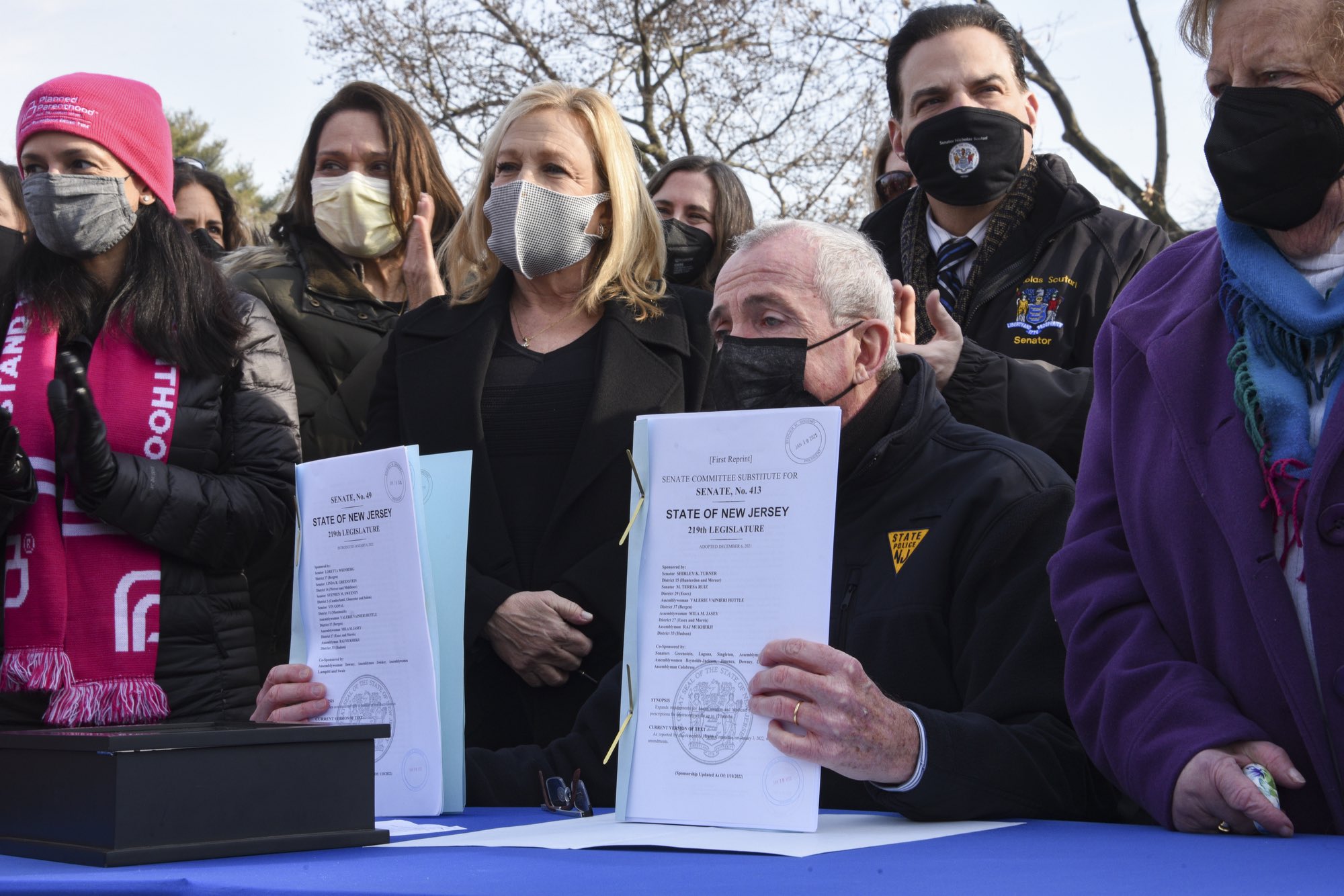
Massachusetts Governor Maura Healey represents a political movement that treats expansive abortion access as a positive social good. Its rhetoric relentlessly centers the wishes, circumstances and autonomy of the mother. The unborn child’s independent humanity is minimized because acknowledging it too clearly makes the moral equation considerably more uncomfortable.
It’s a form of moral conditioning. If society spends decades insisting that a mother’s circumstances can justify intentionally ending the life developing inside her, we shouldn’t be shocked when some people instinctively approach an unimaginable maternal crime by first searching for circumstances that diminish the mother’s culpability.
What was she going through?
Was she overwhelmed?
Was the system failing her?
Was she sick?
Where was the support?
Those may all be relevant questions in determining Clancy’s legal responsibility. But notice how quickly the conversation can become centered on the killer rather than the killed.
Three children are dead.
Cora was five. Dawson was three. Callan was eight months old.
Whatever ultimately happens in a courtroom, they deserve to remain at the center of the moral story.
 The ideological contradiction becomes especially glaring at the boundary of birth. A child moments before delivery and that same child moments afterward aren’t different organisms. Birth dramatically changes the child’s location and, in the view of society, the child’s legal status; it doesn’t magically confer humanity upon something that previously possessed none.
Yet our politics demands that we treat those two moments as separated by an enormous moral canyon.
Before birth, ending that life can be described as health care.
After birth, ending that life is… homicide. Now even that once uncontroversial boundary is being tested by legions of social media abortionistas.
The law obviously needs a clear boundary. Biology is considerably less interested in our political categories.
That’s why the Clancy case touches a nerve beyond the horrifying facts themselves. It exposes a culture that wants to maintain two ideas simultaneously: children are precious and radically deserving of protection, but immediately before birth their right to continue living can remain subordinate to an adult’s choice.
You can construct a legal distinction between those propositions.
Constructing a coherent moral distinction is much harder.
And when a society spends enough time teaching people that motherhood doesn’t necessarily require choosing the child’s life over the mother’s wishes, circumstances or suffering, it shouldn’t act astonished when its moral vocabulary begins bleeding into places where everyone suddenly finds it horrifying.
That’s Maura Healey Syndrome.
Lindsay Clancy’s mental state will be litigated in court.
Our culture’s mental state is fair game for the rest of us.