By Matt Rooney


Getting takeout today in the Garden State? Heads up, Save Jerseyans:
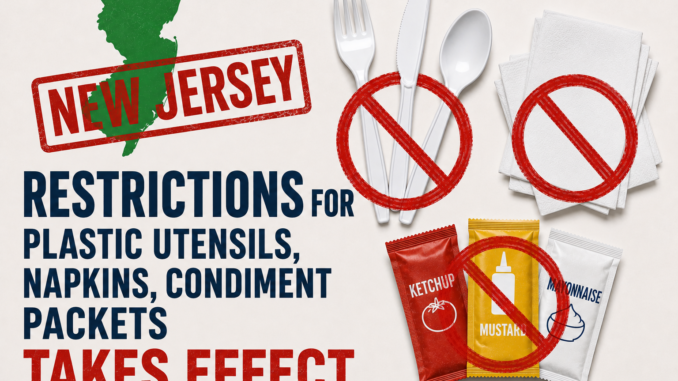
As of August 1st, New Jersey restaurants can no longer automatically include plastic utensils, condiment packets, or extra napkins with takeout and delivery orders.
Instead, if you want a fork, ketchup packet, or handful of napkins, you’ll need to ask for them.
Restaurants that fail to comply won’t just receive a stern talking-to. After an initial warning, repeat violations can result in fines of up to $100 for a second offense and $250 for each subsequent violation, with each day constituting a separate offense.
Supporters insist the new “Skip the Stuff” law will reduce plastic waste and litter.
New Jerseyans have heard that promise before.
Just four years ago, Trenton imposed one of the nation’s toughest bans on single-use plastic and paper shopping bags, promising significant environmental benefits. Yet subsequent research found the policy failed to reduce overall plastic waste, as consumers simply shifted to thicker reusable plastic bags that require substantially more material to manufacture and often end up in the trash anyway. The disappointing results have fueled legislative efforts to repeal the bag ban altogether.
Now the state is doubling down.
On paper, requiring customers to request condiments and utensils sounds harmless. In reality, it’s another government mandate piled onto restaurants already buried under regulations. Employees have one more compliance rule to remember. Online ordering systems have had to be redesigned. Customers who forget to click the right box may find themselves eating pasta with their fingers or fries without ketchup.
Meanwhile, New Jersey families continue to grapple with soaring property taxes, rising electric bills despite promises of relief, and a cost of living that keeps driving residents out of the state.
Yet Trenton somehow found time to regulate napkins.
If restaurants want to reduce waste voluntarily, that’s their prerogative. Many already do because it saves money. Customers can reward businesses whose practices they like.
That’s how markets work.
Government mandates are different. They replace consumer choice with bureaucratic micromanagement.
A missing ketchup packet won’t be the reason someone leaves New Jersey.
But it’s another reminder that while the state’s biggest problems remain unsolved, Trenton never seems to miss an opportunity to regulate the little things.