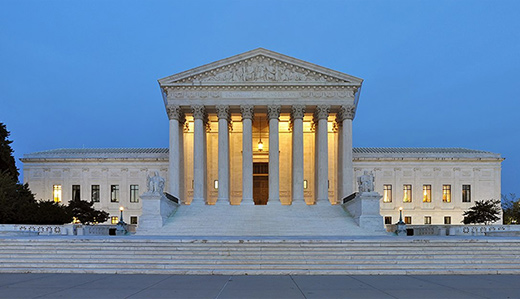
WASHINGTON, D.C. – The U.S. Supreme Court handed the Trump administration a potentially consequential election-integrity victory Monday, lifting a lower-court injunction that had blocked portions of President Donald Trump’s 2026 executive order ahead of the November midterms.
In Trump v. California, the justices granted the administration’s request to stay the injunction while litigation continues. The Court did not rule that the executive order is ultimately constitutional. Instead, the majority concluded that the plaintiff states likely moved too soon because the order itself does not yet impose concrete obligations on them.
That distinction could matter considerably in New Jersey.
Trump’s order directs the Department of Homeland Security to develop “State Citizenship Lists” identifying citizens eligible to vote in upcoming federal elections. States are not formally required to use the lists, but the federal government may now continue developing and distributing them while the case proceeds.
The timing is noteworthy after New Jersey’s disclosure this summer that thousands of people who told the Motor Vehicle Commission they were not U.S. citizens nevertheless ended up registered to vote, with hundreds later determined to have cast ballots.
A federal citizenship list could potentially give election officials another dataset against which New Jersey’s voter rolls can be checked. However, the litigation acknowledges the federal lists could be incomplete, meaning a voter’s absence from one would not by itself establish that the person is a noncitizen.
The executive order also directs the attorney general to prioritize investigations and appropriate prosecutions involving state or local officials who provide federal ballots to ineligible voters. The Supreme Court majority emphasized that this provision concerns enforcement of existing federal election laws and does not itself require states to use the citizenship lists.
A third provision instructs the U.S. Postal Service to pursue new mail-ballot rules, including potential tracking and barcode requirements. The Court stressed that those changes remain subject to rulemaking and could still face future legal challenges.
Twenty-three states and the District of Columbia sued to block portions of Trump’s order, arguing that it unlawfully intruded upon state control of elections. A federal judge agreed and barred implementation for the 2026 election cycle.
The Supreme Court’s majority concluded that the injunction improperly interfered with executive branch operations and noted that waiting for the appeals process to finish could effectively prevent implementation before the midterms.
For New Jersey, the biggest immediate consequence may be simple: Washington now has more room to independently scrutinize citizenship and voter eligibility while Trenton is already under pressure over its own voter-registration failures.
26a124_hgci