By Matt Rooney

Governor Mikie Sherrill just signed legislation expanding New Jerseyans’ access to so-called “plug-in solar” systems, lifting restrictions that green-energy advocates contend are outdated.
Fine. If homeowners, renters and apartment dwellers want to spend their own money on small solar systems to shave a few dollars off their electric bills, why should Trenton stand in their way?
But the latest solar push also presents an opportunity to revisit a much larger question that New Jersey’s green-energy establishment generally prefers to avoid:
What happens when the sun isn’t shining?
It sounds simplistic. It’s also the fundamental weakness of solar power.
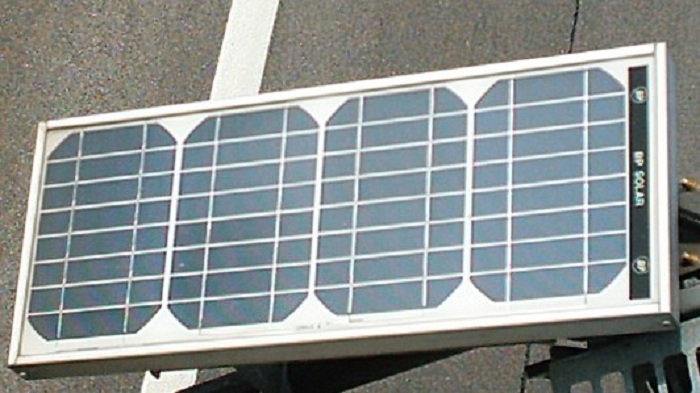
Solar panels generate electricity when conditions permit. They produce nothing at night, less during cloudy weather and fewer total hours of meaningful output during New Jersey’s shorter winter days.
The electric grid doesn’t get to take those hours off.
Hospitals, factories, data centers, supermarkets and millions of New Jersey homes require electricity regardless of whether it’s noon on a beautiful July afternoon or 7 p.m. during a freezing January storm.
There’s also a mismatch between production and consumption. Solar output generally peaks around midday before declining toward evening. Electricity demand can remain strong well after solar generation begins disappearing.
Battery advocates insist storage can solve the problem. Batteries certainly help, but they don’t generate a single electron. They merely store electricity generated elsewhere. Using them to move excess afternoon solar into the evening is one thing. Building sufficient generation and storage to survive prolonged periods of poor renewable output is an entirely different economic proposition.
That’s the important distinction whenever Trenton politicians boast about adding renewable “capacity.”
A megawatt of solar isn’t equivalent, from a reliability standpoint, to a megawatt of firm generation.
Nuclear plants can operate around the clock. Natural-gas plants can be dispatched when they’re needed. Solar power operates according to the weather and the position of the Earth relative to the sun — neither of which responds to a governor’s executive order or legislative mandate.
The numbers illustrate the problem. NREL reports that the cumulative median capacity factor for U.S. utility-scale solar projects installed through 2021 was about 24%; its modeling of residential solar produces a national average of roughly 16%. That’s a far cry from the around-the-clock performance historically associated with nuclear generation.
And the problem doesn’t disappear simply by installing more panels. EIA reported this summer that neighboring New York’s growing small-scale solar fleet has helped depress midday demand while contributing to a much steeper evening ramp as solar production disappears. Between 4 p.m. and 7 p.m., average electricity demand increased by 681 megawatts during the studied spring period in 2018. By 2026, the increase was 2,221 megawatts.
There’s even an industry term for the phenomenon: the “duck curve.”
Solar can reduce electricity consumption from the grid while the sun is shining. What it cannot do without storage or complementary generation is guarantee electricity precisely when consumers need it.
Consequently, a solar-heavy grid still needs backup: natural gas, nuclear power, hydroelectricity, imports, storage or some combination thereof.
And that’s where New Jersey’s larger energy debate gets interesting.
If Sherrill and the Legislature want to eliminate unnecessary regulations preventing residents from installing small systems, that’s hardly objectionable on its face… provided you and I don’t need to subsidize it (which we are, by the way).
The mistake is pretending intermittent resources can replace reliable generation on a one-for-one basis.
New Jersey families already pay dearly to live here. They don’t need an electrical system designed around ideological aspirations rather than engineering realities. New Jersey is already an electricity importer. In 2024, Garden State generators produced about 60.2 million megawatt-hours while retail sales totaled 73.5 million — a roughly 13.4-million-MWh gap.
By all means, plug in your solar panel.
Just remember what happens every night after sunset.
Something else still needs to keep the lights on.