By Matt Rooney

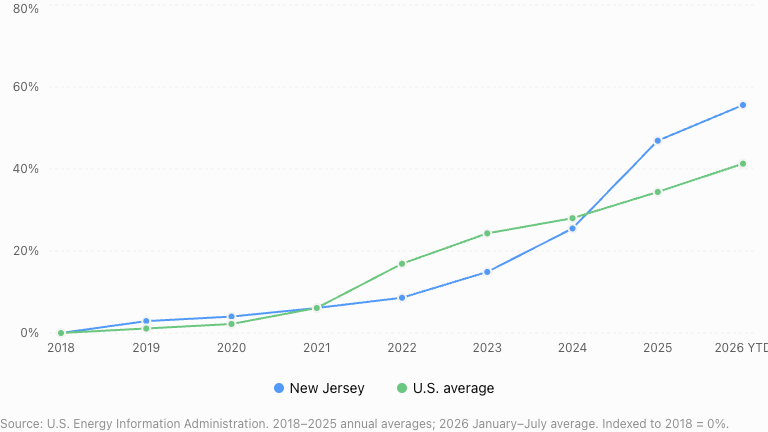
New Jersey’s electricity affordability crisis isn’t just another example of inflation, Save Jerseyans. The Garden State’s electric rates are rising substantially faster than the national average, and the gap has widened dramatically in recent years.
According to residential electricity price data from the U.S. Energy Information Administration (EIA), New Jersey’s average rate climbed from 15.41 cents per kilowatt-hour in 2018 – when Phil Murphy became governor – to 25.19 cents in July 2026, mid-way through Mikie Sherrill’s first year in office.
That’s a staggering 63.5% increase.
Over the same period, the national average increased approximately 42.3%, meaning New Jersey’s electricity price increase outpaced the country’s by more than 21 percentage points.
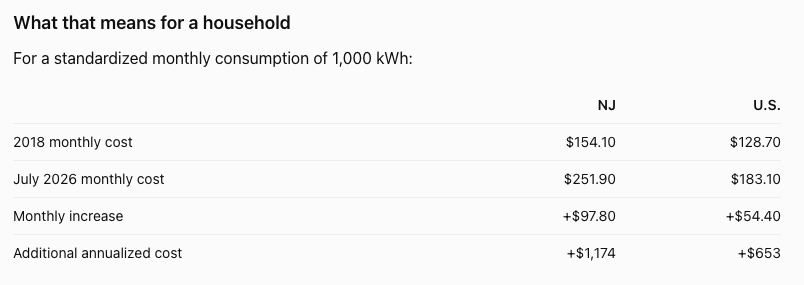
For a household consuming 1,000 kilowatt-hours per month, that translates into a standardized monthly electric bill rising from $154.10 to $251.90 — nearly $100 more every month, or approximately $1,174 more annually at the same consumption level.
And here’s where the story gets particularly interesting…
New Jersey’s electricity price increases actually trailed the national trend during portions of the post-pandemic inflationary period. But the Garden State pulled ahead dramatically in 2025, when residential rates surged following another round of major electricity supply price increases:
It’s difficult to discuss that development without discussing Trenton’s energy policies.
For years, the Murphy administration pursued an aggressive green energy agenda while New Jersey lost conventional generating capacity, including the closure of the Oyster Creek nuclear plant and the B.L. England generating station. Replacement generation has not kept pace with regional demand and retirements, while the state’s offshore wind ambitions consumed significant political attention and public resources without delivering the promised electricity.
New Jersey also operates within the larger PJM regional power market, where tightening supply, growing demand, and transmission constraints have contributed to higher costs.
Gov. Mikie Sherrill inherited the problem, it’s true, but her administration now owns the responsibility for addressing it, especially after boldly (some would say “dishonestly”) promising to “freeze” electric rates:
Thus far, Sherrill signed one bill to make nuclear permitting easier but has doubled down on unreliable solar technologies. Neither policy will address the state’s energy crunch in the immediate future.
The bottom line?
New Jerseyans aren’t simply paying more because electricity is getting more expensive everywhere.
They’re experiencing an increase substantially worse than the national average.
And after nearly nine years of promises about a cleaner, more affordable energy future, ratepayers have every right to ask what they’re actually getting for their money.