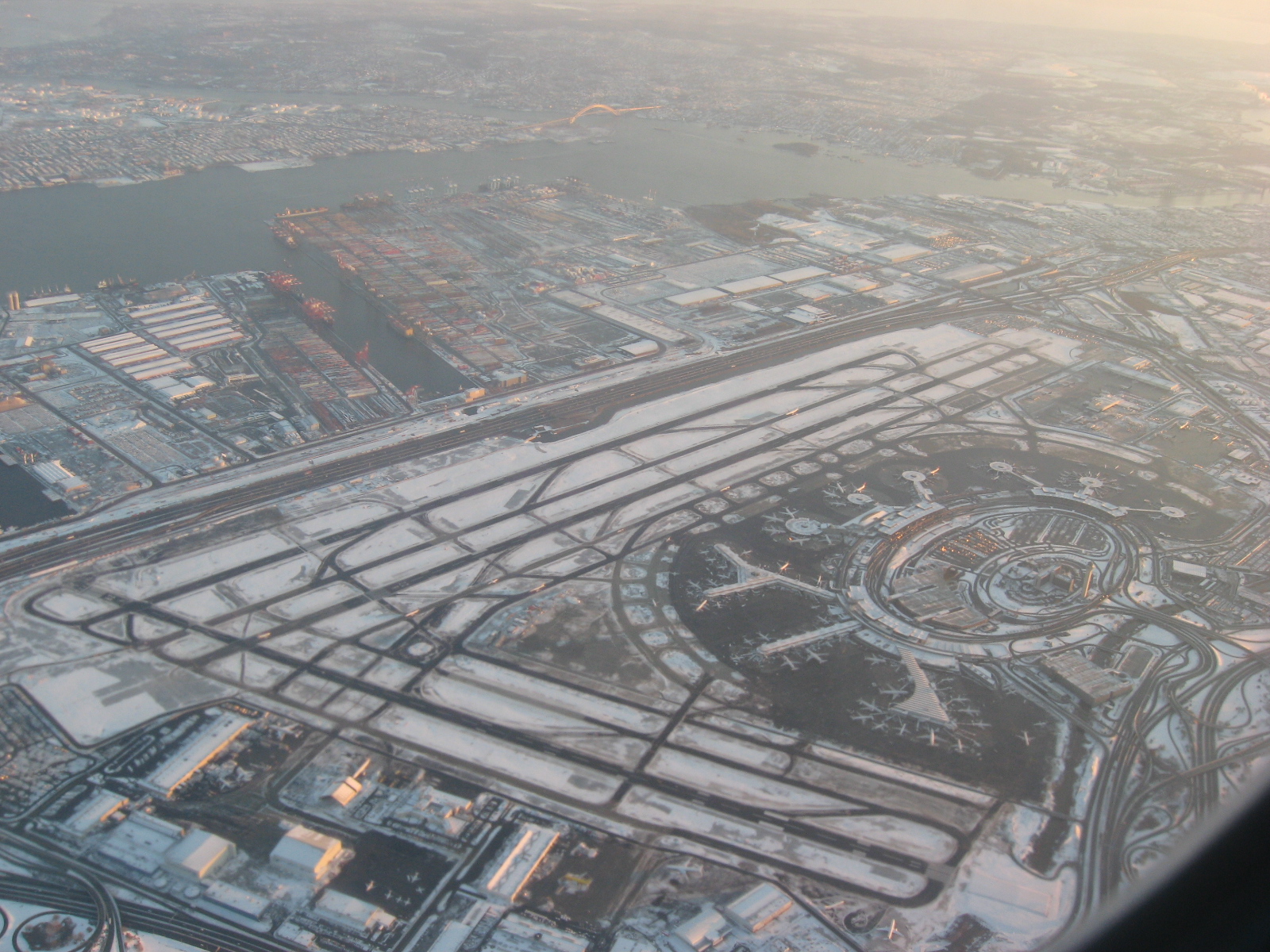
NEWARK, N.J. – New Jersey’s sanctuary state policies could face their most serious practical test yet if the federal government moves forward with reported discussions about limiting or suspending international flight processing at Newark Liberty International Airport.

The possibility emerged amid the growing unrest outside the Delaney Hall ICE detention facility in Newark, where anti-ICE demonstrations escalated into confrontations with federal officers this week. Federal officials are actively examining potential responses involving jurisdictions viewed as obstructing immigration enforcement efforts. While no formal policy change has been announced, the discussion itself underscores the increasingly direct conflict between federal immigration authorities and sanctuary jurisdictions such as New Jersey.
Any suspension of international passenger processing at Newark would carry major consequences. International arrivals require Customs and Border Protection staffing and federal inspection services. Without those operations, airlines would likely reroute many overseas flights to other airports in the region that continue normal federal processing operations.
Newark would still function as a domestic airport, but its role as one of the nation’s primary international gateways would be significantly diminished.
The economic effects could extend well beyond the airport itself. Newark Liberty supports thousands of jobs tied to tourism, hospitality, transportation, cargo operations, and international business travel. United Airlines, which operates one of its largest hubs at Newark, could face substantial operational disruptions if international routes were redirected elsewhere.
The broader issue centers on the ongoing tension between reckless state-level sanctuary policies and the federal government’s constitutional authority over immigration enforcement and border security.
New Jersey’s codified Immigrant Trust Directive and related policies restrict cooperation between local and state law enforcement agencies and federal immigration enforcement authorities in several areas. Critics contend that sanctuary policies increasingly interfere with federal operations and create environments where hostility toward immigration enforcement agencies becomes politically normalized.
That debate intensified after the Delaney Hall unrest, where federal officials accused rioters of obstructing law enforcement operations outside the ICE facility. The incident continues to draw national attention and renewed scrutiny of how far sanctuary jurisdictions can go in resisting federal immigration priorities before triggering a direct federal response.
Legally, the federal government retains broad authority over immigration processing and customs operations at international airports. While states and local governments may challenge federal policies politically or in court, they do not control international entry procedures.
At the same time, any attempt to suspend international processing at a major airport like Newark would almost certainly face legal and political challenges from airlines, business organizations, the Port Authority of New York and New Jersey, and state officials.
Even if such a move never materializes, the fact that it is being discussed reflects how rapidly the sanctuary state debate has escalated beyond symbolic politics.
For years, sanctuary policies were often framed primarily as messaging disputes between progressive states and federal immigration authorities. The Newark situation suggests the conflict may now be entering a phase with potentially significant economic and operational consequences for states that openly resist federal immigration enforcement priorities.
NEW: DHS Secretary Markwayne Mullin warns sanctuary cities could start seeing major disruptions to international flights as federal agents are redirected to deal with violent protests that have been targeting law enforcement and ICE facilities:
“When we have situations, what’s… pic.twitter.com/cg8TdPjR6Q
— Fox News (@FoxNews) May 28, 2026